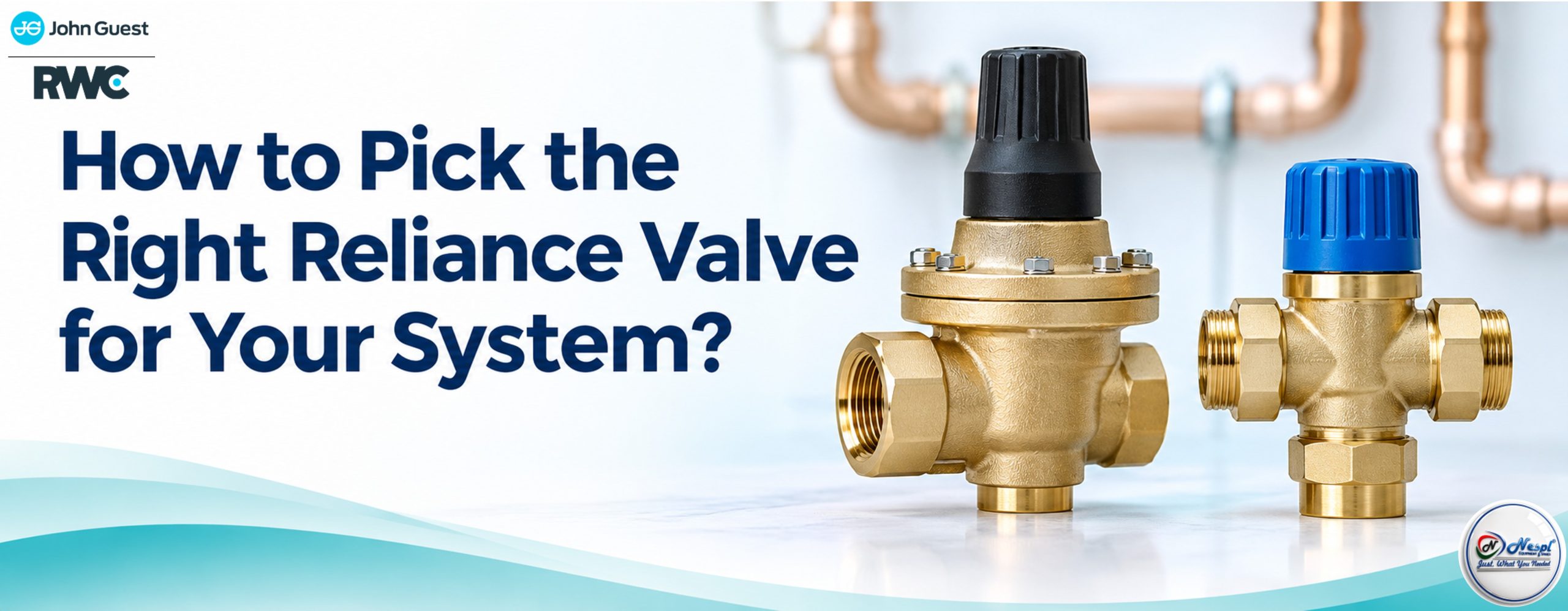
Selecting the right RWC valve is essential for maintaining appropriate water pressure, controlling temperature and protecting plumbing or heating equipment.
Whether you are managing a commercial water supply, hot water installation or heating system, choosing a suitable valve begins with understanding the application’s technical requirements.
RWC Reliance Valves offers a range of plumbing and water-control components, including pressure reducing valves, thermostatic mixing valves and safety relief valves.
Each product serves a different function, and selecting the wrong type can affect system efficiency, water delivery and equipment safety.
This guide explains how to choose the right RWC Reliance valve by evaluating its function, operating pressure, temperature, flow capacity and installation requirements.
For any doubt & Query write us at: sales3@natronequipments.com
What Are RWC Reliance Valves?
Reliance Valves is a water-control and safety product brand within Reliance Worldwide Corporation (RWC).
Its products are used in suitable plumbing, water distribution and heating applications where pressure regulation, temperature control or system protection is required.
Different valve designs perform different functions.
For example, a pressure reducing valve regulates downstream water pressure, while a safety relief valve opens under specified overpressure conditions.
A thermostatic mixing valve, meanwhile, blends hot and cold water to deliver water at a controlled temperature.
Understanding these differences helps ensure the selected product matches the intended system.
1. Identify the Type of Valve Your System Needs
The first step is determining what you want the valve to accomplish.
Reliance Pressure Reducing Valves
A pressure reducing valve (PRV) controls downstream water pressure.
It is commonly considered where incoming supply pressure exceeds the desired operating pressure for downstream fixtures or equipment.
A suitable PRV helps regulate pressure within its specified operating range.
Reliance Thermostatic Mixing Valves
A thermostatic mixing valve (TMV) blends hot and cold water to provide mixed water at a controlled temperature.
These valves are used in appropriate hot water systems, including certain commercial washrooms, hospitality facilities and healthcare applications.
They must be selected according to the required temperature range, flow demand and relevant safety requirements.
Reliance Pressure Relief Valves
A pressure relief valve is designed to open when system pressure reaches a specified limit.
Its purpose is to provide overpressure protection for suitable equipment or installations.
Unlike a pressure reducing valve, it is not intended to continuously regulate normal downstream pressure.
Temperature and Pressure Relief Valves
These valves are used in specified hot water equipment applications where protection against excessive temperature and pressure is required.
Because they perform an important safety function, correct product selection and installation are essential.
Ball and Isolation Valves
Ball valves are generally used to open or close the flow of water within a system.
A standard isolation valve does not perform the same function as an automatic pressure regulating or safety relief valve.
2. Check the Operating Pressure
Water pressure is one of the most important factors when choosing a Reliance valve.
Before comparing models, identify the maximum inlet pressure, expected operating pressure and required downstream pressure.
For a pressure reducing valve, the required outlet pressure must fall within the product’s adjustment range.
You should also verify the maximum permitted inlet pressure and applicable pressure reduction limitations.
Why Pressure Specifications Matter
If a valve operates outside its rated pressure range, it may not perform as intended.
Incorrect selection can contribute to unstable pressure, excessive noise or insufficient water delivery.
Always compare your requirements with the technical datasheet for the exact Reliance valve model.
Specifications for one product should not automatically be applied to another.
3. Verify Temperature Compatibility
Temperature is another major consideration, especially for hot water and heating systems.
A valve suitable for cold water applications may not be appropriate for higher operating temperatures.
For thermostatic mixing valves, review the hot and cold inlet temperatures and the required mixed-water delivery temperature.
The selected valve must operate within the manufacturer’s specified temperature range.
Example: Reliance Heatguard Style TMV3
Reliance’s Heatguard Style TMV3 documentation specifies requirements for water pressure, temperature and flow.
The relevant product information includes a minimum flow requirement and a minimum temperature differential between the hot supply and mixed-water outlet.
These conditions are important because a thermostatic mixing valve must receive suitable supply conditions to regulate the delivered temperature correctly.
Always check the exact product specification before installation.
4. Choose the Correct Valve Size and Flow Capacity
Valve sizing should not be based only on the diameter of the pipe.
You must also consider how much water needs to pass through the valve during operation.
For example, a valve supplying one outlet may have different capacity requirements from a valve serving several commercial fixtures.
Calculate the anticipated water demand, including outlets or equipment likely to operate simultaneously.
What Happens if a Valve Is Undersized?
An undersized valve can restrict water flow and create excessive pressure loss.
This may affect the performance of connected fixtures or equipment.
What Happens if a Valve Is Oversized?
An oversized regulating valve may provide poor control at low flow rates, depending on its design.
For this reason, manufacturers recommend selecting valves according to flow demand and the required operating pressure.
Use the relevant flow charts and technical information when choosing a model.
5. Confirm Connection Sizes and Installation Requirements
A suitable valve must connect correctly to the existing plumbing or heating system.
Before ordering, verify the connection diameter, thread specification, pipe material and installation space.
Depending on the model, Reliance valves may use threaded, compression, union or other connection arrangements.
A replacement valve that looks similar to the original may still have different connection requirements.
Consider Installation Orientation
Some valves have specific flow-direction requirements or installation positions.
Check the manufacturer’s instructions to confirm the correct orientation.
Also ensure sufficient space is available for inspection, adjustment and future servicing.
6. Review Valve Materials and Approvals
The valve’s materials should be suitable for the intended water service and operating temperature.
Different Reliance products may use different body materials, seals and internal components.
For drinking-water installations, verify any applicable potable-water approvals.
For heating systems, check whether the valve is suitable for the intended system conditions.
A certification or material specification applicable to one model should not be assumed to cover the entire product range.
Review the technical documentation for the exact model before purchasing.
7. Give Safety Relief Valves Special Attention
Safety relief valves must be selected carefully because they provide an important protective function.
When replacing a relief valve, confirm the required pressure setting, discharge capacity, connection dimensions and application.
For temperature and pressure relief valves, the specified temperature-sensing probe arrangement may also be relevant.
The correct discharge arrangement is another important installation consideration.
Because these components protect equipment against potentially hazardous conditions, selection and installation should be verified by a qualified professional.
Never substitute a safety relief valve based solely on physical appearance.
8. Consider Maintenance and Long-Term Performance
Maintenance requirements should also influence the purchasing decision.
Depending on the model, servicing may involve inspection, cleaning or replacement of specific internal components.
Check whether relevant service parts are available for the selected valve.
Ensure that the installation provides suitable access for maintenance and inspection.
Keeping the product reference, installation details and commissioning settings in maintenance records can simplify future servicing.
Choosing the correct valve from the beginning helps support dependable system operation and more effective long-term maintenance.
NESPL: Your Trusted Source for RWC Plumbing and Water-Control Solutions
At Natron Equipment & Spares Pvt. Ltd. (NESPL), we supply RWC plumbing and fluid-handling components in India, serving commercial and industrial customers with specialised product sourcing requirements.
Our product portfolio includes products from the RWC brand family, such as John Guest, Speedfit, SharkBite and Reliance Valves. As an authorised distributor of RWC brands, including John Guest and SharkBite, we help customers source suitable plumbing and fluid-control components for their applications.
Whether you are looking for Reliance pressure reducing valves, thermostatic mixing valves or safety relief valves, we can help you explore suitable sourcing options.
To help us identify the right product for your requirements, please share the exact Reliance product reference, intended application, operating pressure, temperature requirements and connection details. This information allows us to assess compatibility and help you find the appropriate sourcing options.
For enquiries about Reliance valves and other RWC products, contact us at sales3@natronequipments.com. Our team will be happy to assist you with your requirements and confirm product availability.
Conclusion
Choosing the right RWC Reliance Valve is essential for maintaining suitable water pressure, temperature control and system protection.
The selection process should begin with the valve’s intended function, followed by careful assessment of pressure requirements, flow capacity, temperature compatibility and installation details.
Pressure reducing valves, thermostatic mixing valves and safety relief valves perform different functions, making correct product identification especially important.
For businesses looking for RWC plumbing components and water-control solutions in India, we offer reliable product sourcing support and assistance in finding the right components for their specific requirements.
Selecting a properly specified valve helps support reliable operation, appropriate maintenance and long-term system performance.
Frequently Asked Questions About Reliance Valves
1. What are RWC Reliance Valves used for?
RWC Reliance Valves products are used in suitable plumbing, water distribution and heating systems for pressure regulation, temperature control, flow isolation and overpressure protection.
2. What is the difference between a pressure reducing valve and a pressure relief valve?
A pressure reducing valve regulates downstream water pressure during normal operation. A pressure relief valve opens when system pressure reaches a specified limit, providing overpressure protection.
3. How do I choose the correct Reliance pressure reducing valve?
Check the inlet pressure, required outlet pressure, expected flow demand, temperature rating, connection size and manufacturer’s technical specifications.
4. Can RWC Reliance Valves be used in hot water systems?
Certain RWC Reliance Valve models are designed for hot water and heating applications. Their suitability depends on the specific temperature rating, pressure limits and intended use.