
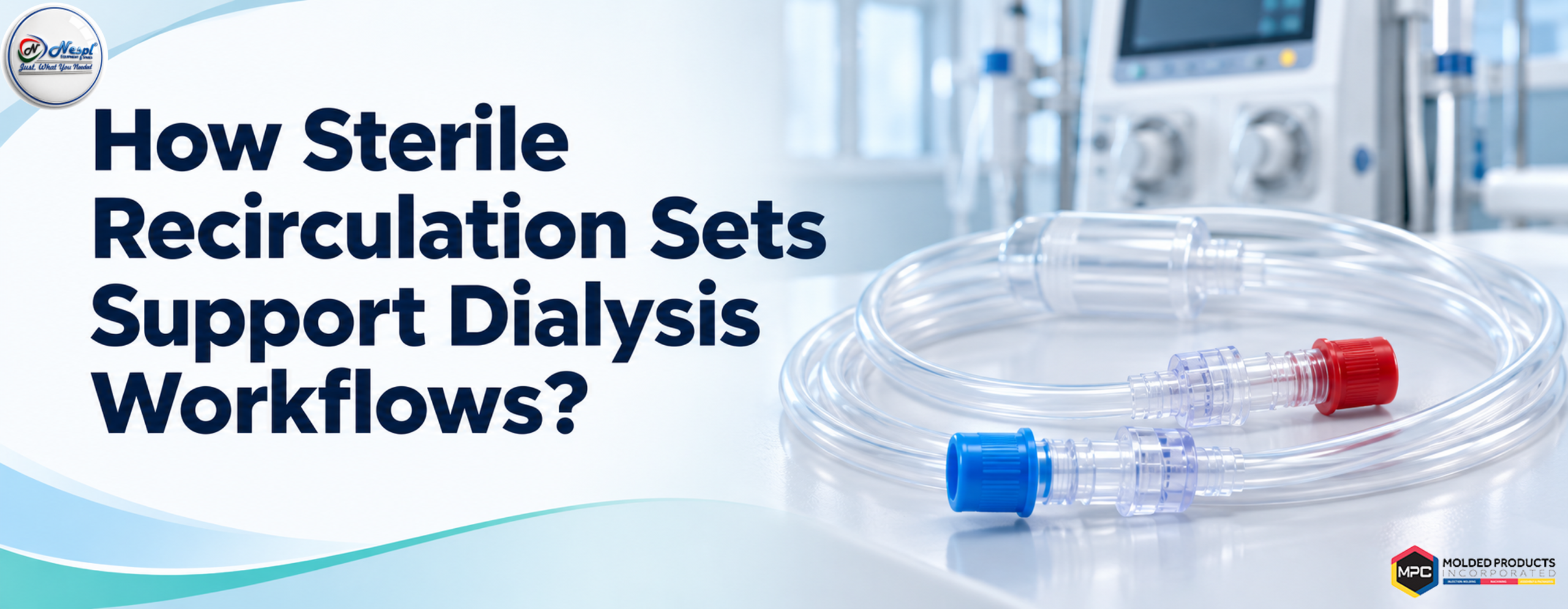
Efficient dialysis treatment begins with careful equipment preparation. Before a haemodialysis session starts, healthcare professionals must ensure that the bloodlines, dialyser and associated components are correctly installed, prepared and ready for use.
Among the important accessories used during this process are sterile recirculation sets for dialysis. These components can support the preparation of the extracorporeal circuit by allowing a temporary circulation pathway before the patient is connected, where permitted by the equipment manufacturer’s instructions.
For hospitals and dialysis centres, selecting suitable recirculation accessories helps maintain an organised workflow and supports established infection prevention practices.
Understanding their function, applications and compatibility requirements is essential for making informed purchasing decisions.
For any doubt & Query write us at: sales3@natronequipments.com
What Is a Sterile Recirculation Set?
A sterile recirculation set is a specialised accessory used in compatible haemodialysis equipment configurations.
During haemodialysis, an extracorporeal circuit carries blood from the patient through the dialyser and back to the patient. Before treatment, this circuit must undergo appropriate preparation and priming procedures.
A recirculation connector may be used to join the arterial and venous patient ends of the bloodlines, allowing priming solution to circulate through the circuit before patient connection.
Depending on the manufacturer, a sterile recirculation product may be supplied as a standalone connector or a more complete tubing assembly. These configurations should not be considered interchangeable without checking their specifications.
For example, MPC (Molded Products Incorporated) manufactures specialised dialysis connectors and recirculation accessories intended for compatible medical fluid pathways.
How Sterile Recirculation Sets Support Dialysis Workflows?
1. Supporting Proper Circuit Preparation
Circuit preparation is an essential stage of haemodialysis treatment.
Before the patient is connected, the dialysis team must prepare the appropriate bloodline and dialyser arrangement using the procedures specified for the equipment.
Where recirculation is part of the approved procedure, a sterile connector provides a temporary connection between compatible bloodline ends.
This helps staff manage the circuit during preparation while keeping the patient disconnected.
The accessory must be used with the correct dialysis equipment and does not replace the manufacturer’s instructions for priming, inspection or safety checks.
2. Assisting With Priming and Air Removal
Air management is a critical consideration when preparing an extracorporeal blood circuit.
Priming procedures are intended to fill the required fluid pathway and help remove air before treatment begins.
In suitable systems, saline recirculation can form part of this preparation process.
However, proper air removal also depends on correct bloodline installation, dialyser positioning, equipment settings and visual inspections.
A sterile recirculation set supports an approved priming workflow but does not independently guarantee complete air removal.
Healthcare professionals must follow the dialysis machine, bloodline and dialyser instructions to ensure appropriate preparation.
3. Supporting Infection Prevention Practices
Infection prevention is especially important in haemodialysis because treatment involves repeated access to the patient’s bloodstream.
Sterile dialysis accessories provide a sterile starting condition when their packaging remains intact and they are handled correctly.
A compatible recirculation connector can help maintain a contained fluid pathway during permitted circuit preparation.
Nevertheless, the use of sterile components alone does not eliminate contamination risks.
Staff must follow appropriate hand hygiene, aseptic connection practices and facility infection prevention protocols.
Sterile connection points should be protected from non-sterile surfaces, and damaged or compromised packaging should be addressed according to the manufacturer’s requirements.
These practices help maintain the integrity of the prepared fluid pathway.
4. Improving Organisation During Treatment Preparation
Dialysis centres frequently manage multiple treatment stations, making efficient coordination important.
Each station requires suitable consumables, equipment checks and trained personnel before treatment can begin.
Having the correct sterile recirculation accessories readily available can support an organised preparation process.
Where allowed by the relevant instructions, a prepared circuit may undergo saline recirculation during the period before patient connection.
This can help staff coordinate equipment readiness and treatment preparation.
However, some systems require recirculated saline to be discarded and replaced with fresh saline before connecting the patient.
The applicable manufacturer’s instructions must always take priority over general workflow practices.
5. Supporting Standardised Dialysis Procedures
Standardised procedures help dialysis facilities maintain consistency across different treatment stations and staff members.
Using clearly identified recirculation accessories reduces confusion between products that may look similar but serve different purposes.
For instance, a bloodline recirculation connector and a dialysate-side recirculation accessory are intended for different fluid pathways.
They must not be substituted for one another without explicit manufacturer approval.
Consistent product identification, appropriate staff training and established preparation checklists help support safer and more organised dialysis operations.
Must visit to explore more: https://www.natronequipments.com/
How to Choose the Right Sterile Recirculation Set?
Choosing suitable dialysis accessories requires more than comparing product names.
- Check the intended use: Determine whether the item is a standalone connector, a complete tubing set or an accessory for a particular dialysis fluid pathway.
- Verify equipment compatibility: Confirm that the connector matches the intended bloodline and dialysis equipment configuration.
- Inspect sterile packaging: Check the packaging condition, expiry date and product identification before use.
- Confirm manufacturer details: Record the manufacturer reference, product code and relevant batch information for procurement and traceability.
- Review handling requirements: Follow the specified storage, disposal and single-use instructions.
These checks help hospitals and dialysis centres select appropriate products and avoid purchasing incompatible accessories.
MPC Sterile Recirculation Sets for Haemodialysis
MPC manufactures specialised connectors and accessories used in dialysis and other medical fluid-handling applications.
Its product portfolio includes bloodline connectors, luer lock accessories, transducer protectors and sterile recirculation products.
One example is the MPC-150 Sterile Recirculation Set, listed in NESPL’s product catalogue under reference NSSP007466.
NESPL identifies this product as a sterile, blood-compatible fluid-path accessory.
Before purchasing, customers should confirm the exact product configuration, connector requirements and suitability for their dialysis equipment.
Buy MPC Sterile Recirculation Sets From NESPL in India
At Natron Equipment & Spares Pvt. Ltd. (NESPL), we supply MPC components, including specialised medical connectors and dialysis equipment accessories for healthcare applications.
Our product range includes the MPC-150 Sterile Recirculation Set and other MPC haemodialysis components, such as luer lock caps, transducer protectors, dialysis connectors and specialised fittings.
We support hospitals, dialysis centres and healthcare procurement professionals in identifying and sourcing suitable MPC products for their equipment and operational requirements.
To help us identify the right components, please share your dialysis equipment model, required product reference and quantity. This information allows our team to check product specifications, compatibility and availability.
For product enquiries, availability and quotations, get in touch with us at sales3@natronequipments.com Our team will be happy to assist you with your requirements.
Conclusion
Sterile recirculation sets are useful components in haemodialysis circuit preparation. When appropriately selected and used according to approved procedures, they support fluid-path management, priming activities and organised treatment preparation.
Their effectiveness depends on compatibility, correct handling, staff training and adherence to manufacturer instructions.
We help healthcare facilities across India source MPC-150 Sterile Recirculation Set and other haemodialysis components, offering product identification and sourcing assistance based on their specific requirements.
Must Buy: https://www.natronequipments.com/medical-core-thermal-industry/mpc/-recirculation-/sterile-recirculation-sets-sterile-fluid-pathblood-compatible-nmpc25.html
Frequently Asked Questions
1. What is the purpose of a sterile recirculation set in dialysis?
A sterile recirculation set supports specific connections within a compatible haemodialysis circuit. Where permitted, it may allow priming solution to circulate through the extracorporeal bloodline circuit before patient connection.
2. Are sterile recirculation sets compatible with all dialysis machines?
No. Compatibility depends on the product design, bloodline configuration and dialysis system. Always verify the manufacturer’s specifications before selecting a recirculation accessory.
3. Can sterile dialysis recirculation sets be reused?
Products labelled for single use should not be reused outside applicable manufacturer and regulatory requirements. Healthcare facilities must follow the product’s instructions and established infection control procedures.
4. What should hospitals check before purchasing sterile recirculation sets?
Hospitals should verify the product reference, connector type, intended use, system compatibility, sterile packaging, expiry date and relevant handling instructions.