The ophthalmic industry plays a vital role in improving vision and enhancing the quality of life for millions of people worldwide. From contact lenses and intraocular lenses (IOLs) to advanced surgical instruments and diagnostic devices, ophthalmic technologies help healthcare professionals diagnose, treat, and manage a wide range of eye conditions.
For any doubt & Query write us at: sales3@natronequipments.com
Before any ophthalmic device reaches the market, it must undergo extensive testing to ensure safety, performance, and reliability. Since these devices interact directly with one of the most sensitive organs in the human body, even the smallest design flaw can affect patient outcomes.
This is why laboratories and medical device manufacturers rely on specialized testing equipment to evaluate ophthalmic products under controlled conditions. Among these testing solutions, silicone test chambers have become an essential tool for accurate and reliable ophthalmic device testing.
What Are Silicone Test Chambers?
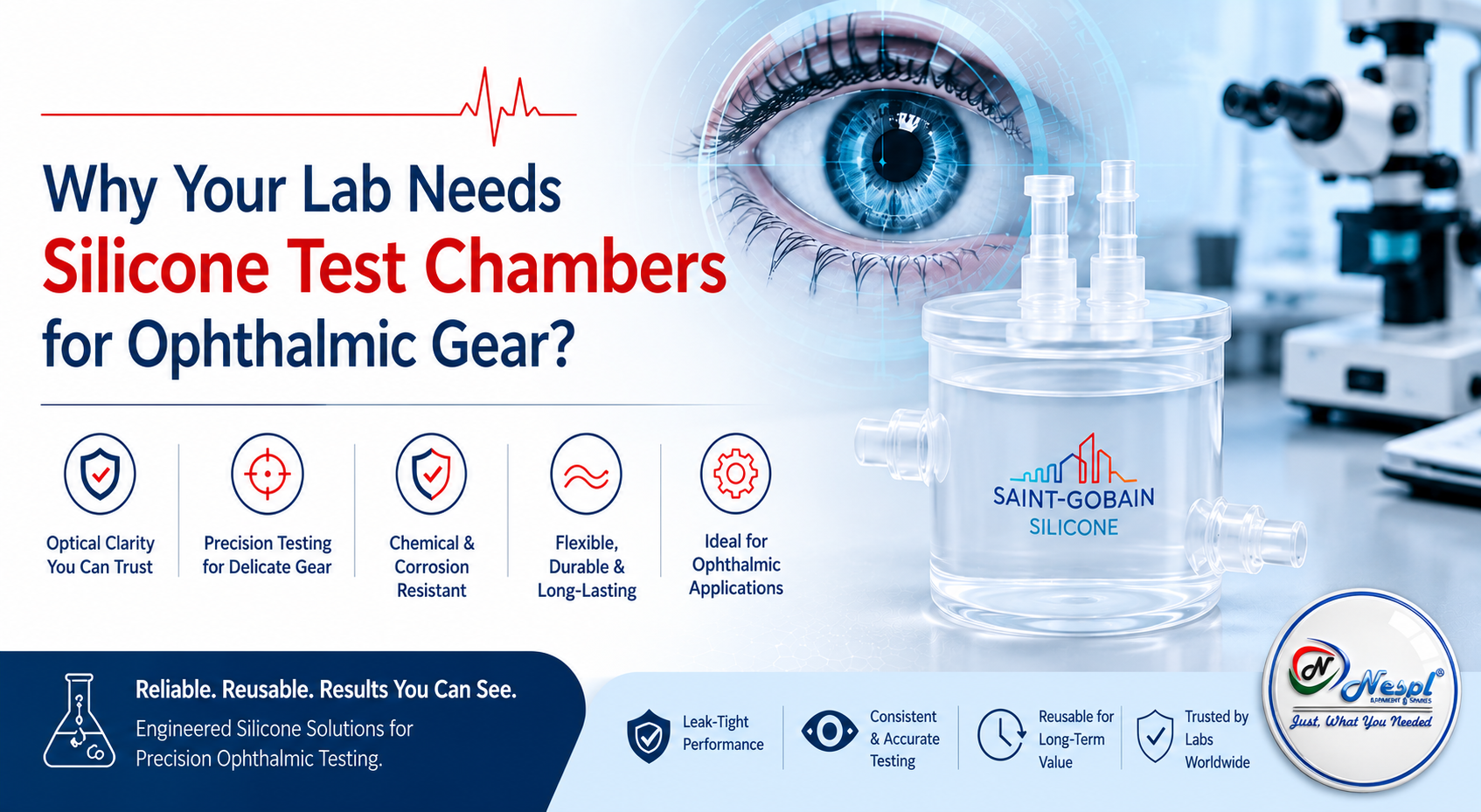
Silicone test chambers are specialized testing enclosures designed to hold and evaluate ophthalmic devices under controlled laboratory conditions. They help researchers simulate real-world environments and assess how products perform before they are approved for clinical use.
Manufactured using high-quality silicone materials, these chambers provide an ideal testing environment for studying fluid interactions, device performance, durability, and biocompatibility.
Their ability to deliver consistent and repeatable testing conditions makes them a valuable component in ophthalmic research, development, and quality assurance processes.
Why Silicone Test Chambers Are Important for Ophthalmic Testing?
1) Excellent Biocompatibility
Ophthalmic devices are designed to come into direct contact with the eye or surrounding tissues. As a result, testing environments must closely replicate biological conditions without affecting the accuracy of the results.
Silicone is widely recognized for its excellent biocompatibility, making it an ideal material for ophthalmic testing applications. Silicone test chambers help minimize unwanted material interactions and support more reliable testing outcomes.
They are commonly used when evaluating:
- Contact lenses
- Intraocular lenses (IOLs)
- Ocular implants
- Drug delivery systems
- Diagnostic ophthalmic devices
2) Realistic Testing Conditions
One of the biggest challenges in ophthalmic product development is accurately recreating the conditions found inside the human eye.
Silicone test chambers help laboratories simulate:
- Controlled fluid environments
- Pressure variations
- Device-tissue interactions
- Real-world operating conditions
This allows researchers to better understand how ophthalmic devices are likely to perform in actual clinical settings.
3) Excellent Chemical Resistance
Laboratories frequently use saline solutions, pharmaceutical formulations, cleaning agents, and other testing fluids.
Silicone offers excellent resistance to many chemicals, helping maintain the integrity of the test chamber even during repeated testing cycles. This durability helps ensure consistent testing conditions and reliable results over time.
4) Improved Visibility During Testing
Many ophthalmic evaluations require continuous observation throughout the testing process.
Silicone test chambers can be designed to support clear visibility, allowing researchers to monitor fluid movement, device behavior, and performance characteristics in real time. This improves data collection and helps identify potential issues more quickly.
5) Long-Term Durability
Testing equipment must withstand frequent use while maintaining consistent performance.
Silicone test chambers offer several durability advantages, including:
- Resistance to cracking and tearing.
- Long service life.
- Reduced maintenance requirements.
- Consistent performance across multiple testing cycles.
This makes them a cost-effective solution for laboratories handling large volumes of testing and validation work.
6) Easy Sterilization and Cleanroom Compatibility
Maintaining a clean testing environment is critical in ophthalmic research and medical device development.
Silicone test chambers are compatible with various sterilization methods and can be used in controlled laboratory and cleanroom environments. Their non-porous surface helps reduce contamination risks and supports compliance with quality and safety standards.
7) Supports Regulatory Compliance
Medical device manufacturers must generate accurate and repeatable testing data to meet regulatory requirements.
Silicone test chambers help laboratories:
- Standardize testing procedures
- Improve test repeatability
- Maintain data consistency
- Support validation and verification activities
By reducing testing variability, they help organizations streamline product development and regulatory approval processes.
8) Customization for Specialized Applications
Not all ophthalmic devices are the same, and testing requirements can vary significantly between products.
One of the biggest advantages of silicone test chambers is their flexibility. Custom-designed chambers can be developed to accommodate specific testing requirements, including:
- Unique lens designs
- Specialized fluid pathways
- Pressure testing applications
- Prototype evaluations
- Research and development projects
This adaptability makes silicone test chambers suitable for a wide range of ophthalmic testing applications.
How Silicone Test Chambers Improve Research Efficiency?
Reliable testing data is essential for bringing new ophthalmic technologies to market.
Silicone test chambers help improve laboratory efficiency by providing:
- Consistent testing environments
- Reliable and repeatable results
- Reduced sample variability
- Faster validation processes
- Improved troubleshooting capabilities
As a result, research teams can spend less time addressing testing inconsistencies and more time focusing on innovation and product development.
Source Quality Silicone Test Chambers from NESPL
Choosing the right testing components is essential for obtaining accurate and reliable results. Laboratories and medical device manufacturers should always source testing solutions from trusted suppliers who understand the demands of ophthalmic and medical device applications.
NESPL supplies high-quality fluid handling and testing solutions from globally recognized brands. With extensive experience supporting medical device manufacturers, research laboratories, and healthcare organizations, NESPL helps customers source reliable products that meet demanding performance and quality requirements.
Whether you are developing ophthalmic devices, conducting laboratory testing, or validating medical equipment, NESPL can help you find the right components and solutions for your application.
Conclusion
As ophthalmic technologies continue to evolve, the demand for accurate, reliable, and repeatable testing solutions continues to grow. Silicone test chambers provide the biocompatibility, durability, chemical resistance, and testing precision needed to support modern ophthalmic research and product development.
Must Visit to explore more: https://www.natronequipments.com/
From contact lens testing and intraocular lens evaluation to advanced medical device validation, silicone test chambers play an important role in helping laboratories develop safer, more effective, and higher-performing ophthalmic products. Investing in the right testing solutions today can help accelerate innovation, improve product quality, and support better patient outcomes in the future.