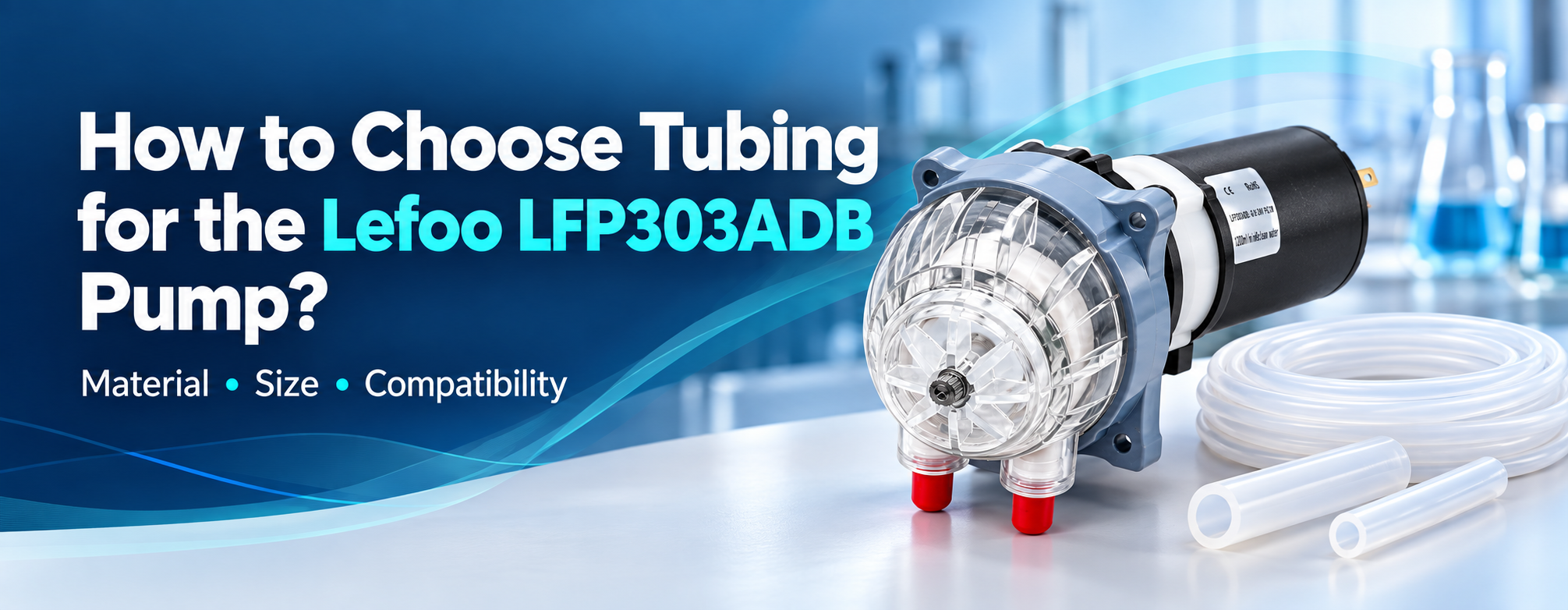
Selecting the correct tubing is an important part of setting up the Lefoo LFP303ADB pump. The right tubing helps maintain proper flow, minimise leakage, and support reliable pump performance.
Using tubing with the wrong size, material, or pressure rating can affect system efficiency and lead to premature wear or connection problems. Whether you are setting up a new system or replacing existing tubing, your selection should match the pump specifications and the requirements of the application.
For any doubt & Query write us at: sales3@natronequipments.com
Key Factors to Consider When Selecting Tubing for the Lefoo LFP303ADB Pump
1. Check the Pump Port Size
Start by identifying the inlet and outlet port sizes of the Lefoo LFP303ADB pump. The tubing must be compatible with the pump’s connection configuration.
Before ordering, confirm the exact pump model, port dimensions, and fitting type. If an adapter or connector is required, make sure it is compatible with both the pump port and the selected tubing.
Avoid forcing tubing onto a connection that is too large or too small, as this can result in leakage or an unreliable connection.
2. Select the Correct Tube Diameter
Tube diameter affects flow resistance and overall system performance. Tubing that is too narrow may restrict flow and increase pressure loss, while tubing that is too large may not fit the pump connections correctly.
Choose the diameter recommended for the LFP303ADB configuration and your application. Depending on the fitting, you may need to check the tubing’s inside diameter (ID) or outside diameter (OD).
Always verify the required dimensions before purchasing replacement tubing rather than relying on visual estimates.
3. Choose a Compatible Tubing Material
The appropriate tubing material depends on the fluid being handled, operating temperature, pressure, and surrounding environment.
Common options include silicone, PVC, polyurethane, polyethylene, and other engineered materials. However, not every material is suitable for every application.
Consider the following factors before making a selection:
- Fluid compatibility: Ensure the tubing material is suitable for the liquid or gas being handled.
- Temperature range: Check that it can withstand the expected operating temperature.
- Pressure requirements: Confirm that the tubing is rated for the system’s operating conditions.
- Flexibility: Choose tubing that can be routed properly without kinking or restricting flow.
- Chemical exposure: Check compatibility if the tubing may come into contact with cleaning agents or other chemicals.
- Service life: Consider wear, flexibility, and the expected frequency of replacement.
Do not select tubing based only on its appearance or availability. Always check the manufacturer’s specifications for the intended application.
4. Consider Pressure and Vacuum Requirements
If the LFP303ADB pump operates under pressure or vacuum, the tubing must be rated for those conditions.
Check the system’s operating pressure, vacuum requirements, and temperature range before choosing a tube. The tubing should have suitable ratings for the expected operating conditions, including any relevant variations during use.
Tubing that is not designed for the application may collapse, deform, leak, or disconnect. Confirm the manufacturer’s pressure and vacuum ratings rather than assuming that all tubing materials perform in the same way.
5. Check Fittings and Connections
The tubing must be compatible with the fittings used on the pump. Depending on the system configuration, connections may be push-fit, barbed, threaded, or another suitable type.
Check that the tubing fits securely without excessive stretching or compression. If clamps are required, select the appropriate size and type for the tubing and connection.
A correctly matched tube-and-fitting combination helps minimise leakage and makes future replacement easier. Before ordering, confirm the connection type and dimensions of the existing setup or refer to the pump documentation.
6. Consider Tubing Length and Routing
Tubing length and routing can affect flow resistance and make a difference to how easily the system can be maintained.
Keep tubing runs as short and direct as practical. Avoid sharp bends, kinks, and unnecessary loops that could restrict flow or place stress on the pump connections.
If the tubing needs to bend around equipment, select a material and wall construction that can maintain its shape without restricting flow. Secure the tubing appropriately so that vibration or movement does not place excessive stress on the connections.
Why Is Choosing the Right Tubing Important?
Choosing suitable tubing helps the Lefoo LFP303ADB pump operate under the intended conditions. Correct sizing, material compatibility, and appropriate pressure ratings can help reduce leakage risks and avoid unnecessary restrictions.
It is equally important to check the fittings, temperature limits, and tubing route. Considering these factors before purchasing can help prevent compatibility issues and reduce the likelihood of premature tubing replacement.
Why Source Pump Tubing from NESPL?
Natron Equipment & Spares Pvt. Ltd. (NESPL) supplies equipment and replacement components for industrial and commercial applications. If you are looking for tubing or related components for the Lefoo LFP303ADB pump, NESPL can help you identify and source the required product based on the available model and application details.
When enquiring, share the exact pump model, required tube dimensions, connection type, fluid being handled, and any known operating requirements. These details help identify a suitable product for your application.
Conclusion
Choosing the right tubing for the Lefoo LFP303ADB pump involves more than matching the connection size. You should consider the pump port dimensions, tube diameter, material compatibility, pressure and vacuum requirements, fittings, temperature range, and tubing route.
Before ordering replacement tubing, verify the exact pump model, required dimensions, fitting configuration, and application conditions. Selecting compatible tubing from the outset can help reduce leakage risks, maintain appropriate flow, and support reliable pump operation.