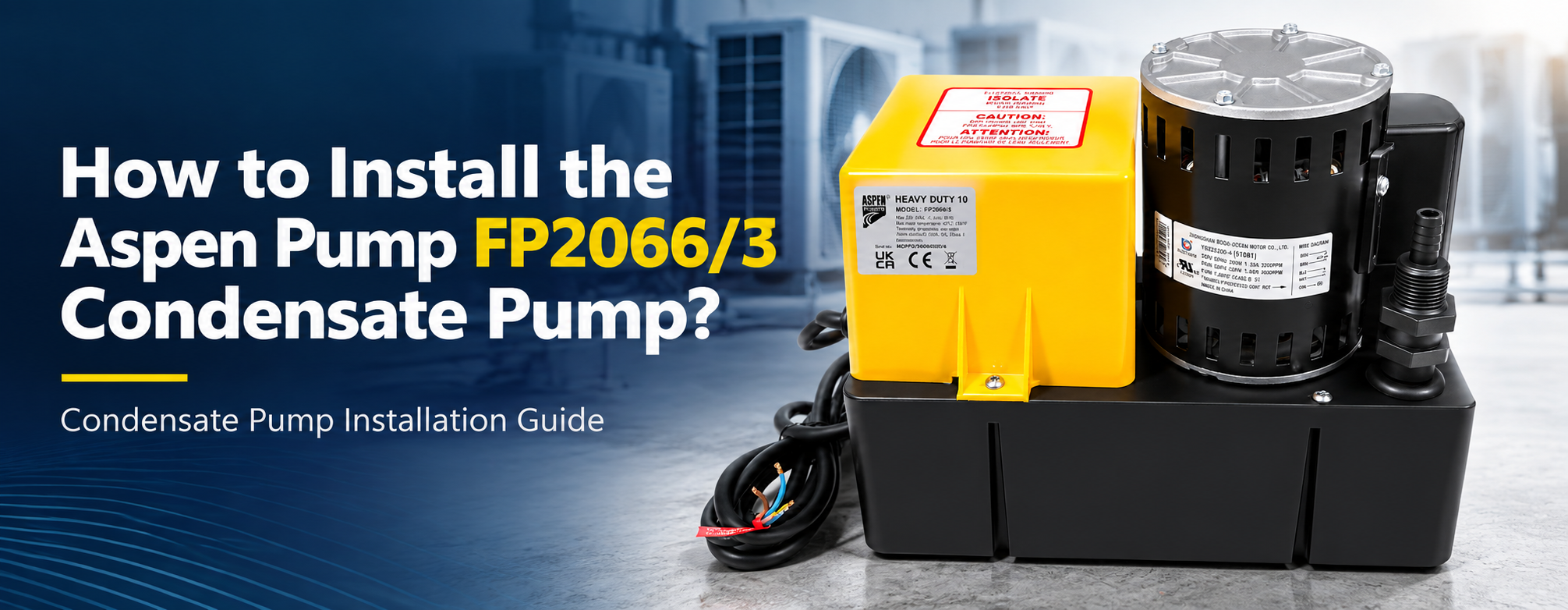
The Aspen Pump FP2066/3 condensate pump, also known as the Heavy Duty 10, is designed to remove condensate water from HVAC systems where gravity drainage is not practical. Correct installation helps ensure effective water removal, reliable operation, and safe use.
Before installation, check the pump’s specifications, the equipment manufacturer’s instructions, and the installation manual supplied with the pump
For any doubt & Query write us at: sales3@natronequipments.com
Step-by-Step Guide to HVAC Condensate Pump Installation.
1. Prepare for Installation
Before starting, switch off and isolate the HVAC equipment and pump from the electrical supply. Make sure the installation area is clean, dry, and suitable for mounting the pump.
Check the pump for visible damage and ensure that the required tubing, drain connections, mounting accessories, and electrical provisions are available. Review the installation manual to confirm the required connections and installation conditions.
2. Choose a Suitable Installation Location
Position the pump close to the condensate source while leaving enough space for inspection, cleaning, and maintenance.
Secure the pump in the orientation specified by the manufacturer. Avoid locations exposed to excessive heat, water splashing, or conditions outside the pump’s specified operating limits.
Plan the pipework carefully so that the condensate can reach the pump without unnecessary bends or restrictions.
3. Connect the Condensate Inlet
Connect the condensate drain from the HVAC equipment or collection point to the pump’s inlet, following the manufacturer’s instructions.
Ensure that the inlet connection is properly seated and secure. Avoid kinks, blockages, and sharp bends that could restrict water flow.
Check the inlet arrangement before proceeding to ensure that condensate can enter the pump as intended.
4. Connect the Discharge Tube
Connect suitable discharge tubing to the pump outlet and route it to the designated drainage point.
Keep the discharge line secure and avoid unnecessary bends or restrictions. If the installation requires water to be pumped vertically, check that the total lift and discharge arrangement remain within the pump’s specified performance limits.
The Aspen FP2066/3 has a maximum recommended head of 9 metres at a flow rate of 100 litres per hour. Actual performance depends on the installation conditions, so consult the manufacturer’s performance data when planning the discharge route.
5. Complete the Electrical Connections
Electrical connections must be completed by a suitably qualified person in accordance with the pump’s specifications and applicable electrical regulations.
Before connecting the pump, verify the required supply voltage, frequency, wiring arrangement, and safety-switch connections using the manufacturer’s instructions. Keep the power supply isolated while electrical work is being carried out.
If the installation uses the pump’s high-level safety switch, ensure it is connected and configured as specified by the manufacturer. This safety function is important because it can help protect the connected equipment if condensate drainage fails.
6. Test the Pump After Installation
Once installation is complete, inspect the tubing, mounting, and electrical connections before restoring power.
Introduce water into the condensate collection area according to the manufacturer’s testing instructions. Check that the pump starts, transfers water through the discharge line, and stops as expected.
Inspect the system for leaks, unusual noise, vibration, or restricted flow. Also, test the high-level safety switch according to the installation manual to confirm that the safety function operates correctly.
Do not put the system into normal service until the pump and its safety functions have been checked.
7. Complete the Final Installation Checks
Before using the equipment, confirm that:
- All inlet and discharge connections are secure.
- The discharge tubing is correctly routed and free from kinks or blockages.
- The pump is mounted securely in the recommended position.
- Electrical connections meet the manufacturer’s requirements.
- The pump removes water correctly during testing.
- There are no leaks around the connections.
- The high-level safety switch operates as intended.
These checks help identify installation problems before the equipment returns to normal operation.
Why Choose the Aspen FP2066/3 Condensate Pump?
The Aspen FP2066/3 Heavy Duty 10 is designed for applications that require the removal of large volumes of condensate. According to the manufacturer’s product information, it has a 4-litre tank capacity, a maximum flow rate of 1,070 litres per hour, and a maximum recommended head of 9 metres at 100 litres per hour.
It is intended for compatible high-demand HVAC applications, including air handling units and dehumidifiers. The pump’s suitability should be checked against the condensate load and drainage requirements of the specific installation.
Why Choose NESPL for Condensate Pumps and Replacement Parts?
Natron Equipment & Spares Pvt. Ltd. (NESPL) supplies equipment and replacement components for various industrial and commercial applications. If you are looking for an Aspen FP2066/3 condensate pump or related components, NESPL can help you source the required product based on your model and application requirements. Providing the exact model number and relevant specifications helps identify the appropriate product for your system.
Conclusion
Installing the Aspen Pump FP2066/3 condensate pump correctly involves choosing a suitable location, connecting the inlet and discharge tubing, completing the electrical connections safely, and testing the pump before operation.
Always follow the manufacturer’s installation manual and verify the pump’s electrical requirements, discharge limits, and safety-switch connections. Proper installation and testing help support reliable condensate removal and reduce the risk of drainage problems.